Why Most Entrepreneurs Are Busy Being Broke
I see it all the time. Entrepreneurs working 60+ hour weeks, drowning in tasks, convinced they're the only ones who can do the work. They wear exhaustion like a badge of honour. But here's what I've learned after years…
February 10, 2026
I see it all the time. Entrepreneurs working 60+ hour weeks, drowning in tasks, convinced they're the only ones who can do the work. They wear exhaustion like a badge of honour. But here's what I've learned after years of working with founders: being busy doesn't mean you're building anything valuable.
The average worker is productive for less than three hours each day ( research shows it's closer to two hours and 53 minutes ) in an eight-hour workday. The rest? Motion disguised as progress. That gap between activity and results is costing you more than time; it's costing you the business you actually want to build.
The Real Problem Isn't Time
When I sit down with an entrepreneur who can't take time off without their business falling apart, I don't start by looking at their calendar. I look at what tasks are on their plate that they dread doing but feel like they are the only one who can do it. The excuses are always the same:
- No one on the team has the right skill set.
- The client wants me, not my team.
- It's faster if I just do it myself.
- The work quality is at risk when someone else does it.
- This is my IP; it's too nuanced to hand off.
But underneath all these reasons is something deeper. You're creating excuses to stay stuck. Those excuses are keeping your business small. Your business can't scale if it can't work without you.
The Identity Trap
Here's what most people don't talk about: when you turn a talent into a business, that talent often becomes part of your identity. You've spent years developing this skill. You wear all those hats with pride because it took time, trials, and errors to learn them.
Then someone tells you to let something go, and you feel worthless. It can also feel threatening. When you attach money to your talent, and that talent is your identity, money becomes a direct measure of your worth as a person. That's when things get messy. You either think you're not worth much if you're not making enough, or you feel guilty making money from something that comes easily to you.
But here's the shift: you don't need to find someone who can wear all your hats the same way you do. You just need to take them off one at a time and hand them to people who are good at one particular thing. You're not looking for a unicorn. You're delegating 10 or 20% here or there when a particular area is creating pain or pressure.
Finding Your Secret Sauce
When I work with entrepreneurs who think everything on their plate is critical, I use a two-part diagnostic.
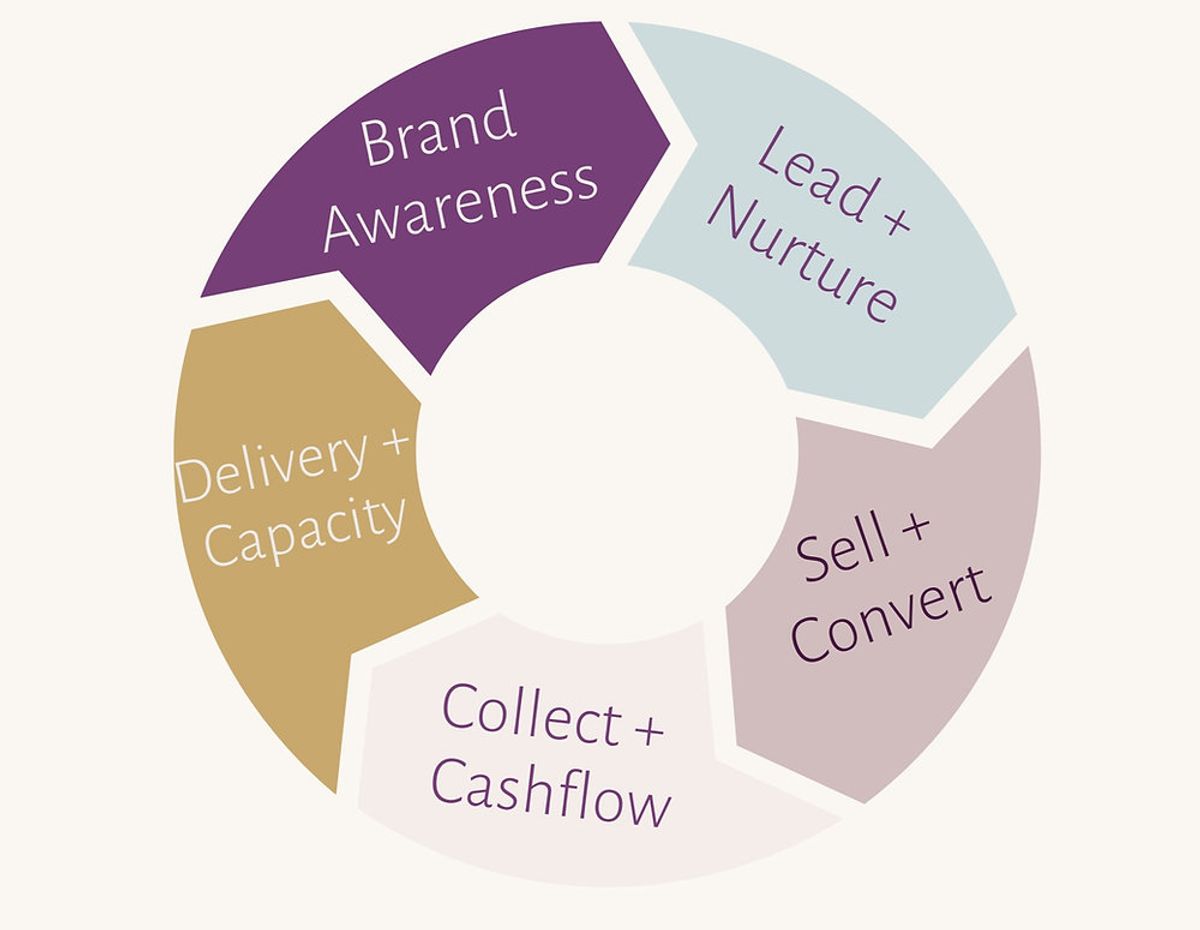
First, I identify the bottleneck. There are five systems in every business that typically create bottlenecks:
- Brand awareness — Your ideal clients need to know you exist and the problem you solve.
- Lead generation — Capturing and nurturing your ideal potential customers.
- Sales vehicles — How are you converting leads and overcoming objections?
- Delivery and capacity — Do you know your current capacity, and can you actually fulfil what you're promising with excellence?
- Cash flow — Is there money available when you need it?
One of these is your weakest link right now. That's where you focus.
Second, I help you find your secret sauce. This is the one activity you'd put your reputation on the line for. The thing that makes your business uniquely valuable.
Here's how to find it: Ask yourself what transformation you promise your clients. Then identify six critical activities that, if you put more resources (time, money, energy) behind them, would improve the results you deliver. Keep narrowing until you land on the one thing that has to be done to your standard because of your unique approach.
Two accountants can be in the same industry with completely different secret sauces. One might focus on lightning-fast turnaround times. The other might emphasise strategic growth guidance through regular one-on-ones. Same industry, different value propositions.
The surprise? Most entrepreneurs realise they've been spending all their time on everything except their secret sauce.
The Happy Grenade Problem
Even when you know what matters, something pulls you back into chaos. I call them "happy grenades." Ideas that feel productive but distract your focus. For example, if you identify that leads are your biggest bottleneck, you might get excited about a new capacity-building idea. It's a good idea. But it fixes the wrong problem right now.
According to research on the 80/20 rule , focusing on the vital few priorities that drive performance creates disproportionately powerful results. But most entrepreneurs try to fix all five bottlenecks at once. The solution? Quarterly strategic planning meetings. Every quarter, you decide which bottleneck needs the most attention. You document all those happy grenades in a 'toy box' (you can play with them later), but right now, you focus on the one thing that matters most.
The Execution System That Actually Works
Planning without execution is just dreaming. Here's the system that keeps you on track: Break each quarter into six two-week sprints. Each sprint moves the needle on your current bottleneck. You measure progress with specific metrics, which include both lead and lag indicators.
Time-block two tasks per day:
- One 'business-as-usual' task that keeps the flow moving through all five bottleneck areas.
- One 'traction task' that's project-based and focused on improving your current bottleneck.
If you only complete these two tasks in a day, you're still moving forward and keeping balance. Everything else you achieve in a day you can consider a bonus. Work at approximately 70% capacity, not 100%. When your energy is low or you're not feeling well, you can pull back to just those two tasks. You'll achieve more than if you tried to do everything without focus.
The accountability comes from measuring the numbers at each sprint check-in. If the numbers haven't moved despite your efforts, you retrospectively analyse with your team why and adjust your strategy.
The Captain Problem
Sometimes people implement all of this and still slip back into old patterns. When that happens, the missing piece is usually vision—your North Star.
You're the captain of your ship. Your team needs you on deck, guiding where to go and watching for icebergs (threats). We don't want you below deck shovelling coal into the engine; that is not using your time on high-value productivity tasks.
Instead, find a team who enjoys doing that work. They need you keeping to the visionary work that only you can do. Often, when you've built a business entirely dependent on your shoulders, experience, and skillset, seeing what the business could look like beyond you requires outside perspective. Maybe from a mentor or a strategist, or looking at other industries and even competitors to see what's possible.
Understanding that big picture—where you want your business to go, the reasons behind why you're building it, and a mission that drives your passion—is what keeps you from getting pulled back into the coal room.
The Truth About Business Value
Here's the insight I wish more entrepreneurs understood before they hit breaking point: Your business is more valuable without you in it.
That might sound counterintuitive. But if you ever want to sell your business, step out of your business, find investors, or retire with income still flowing, you need to turn your business, IP, and systems into assets.
The data backs this up. According to business valuation research , owner-dependent businesses sell for 50-70% less than businesses with transferable systems—if they sell at all. Studies show that 80% of SME businesses never find a buyer. The main reason is dependency on the business owner.
Removing yourself from the dependency equation makes your business more valuable to sell, more attractive to investors, and more valuable to you when you want to retire. That's an asset that continues generating income even during retirement. And we haven't even talked about the benefits of stepping away to enjoy life. To spend time with loved ones, to have adventures, and to put your health first instead of last. Because if you're a true leader and the captain of your ship, your business still depends on you taking care of yourself—your mental health, your physical health, all of it. You can't do that if you're not prioritising your needs.
Where to Start
If you're reading this and recognising yourself in these patterns, start here: Identify which of the five bottlenecks (use my bottlenecks quiz here ) is holding your business back right now. Then find your secret sauce—that one activity you'd stake your reputation on.
Look at where you're actually spending your time. Chances are, it's everywhere except where it matters most. The 80/20 rule isn't about working less. It's about focusing your effort on the 20% of activities that generate 80% of your results. Everything else is just keeping you busy being broke. Your business doesn't need you to do everything. It needs you to do the right things.